Plastic gears: The silent revolutionaries in modern industry
As the core componen
As the core component of mechanical transmission, the history of gear development is almost synchronized with human industrial civilization. From wooden gears in the Bronze Age to metal gears after the Industrial Revolution, every material innovation has promoted the performance breakthrough of mechanical systems. In the mid-20th century, with the rapid development of polymer material science, the birth of plastic gears quietly rewrote the rules of traditional power transmission. This polymer-based gear, with its unique material properties, is setting off a "silent revolution" in the field of precision transmission such as automobiles, home appliances, and medical equipment.Guangzhou Aote Engineering Plastics Co., Ltd., your professionPlastic gearConsultant! Professionally solve your plastic gear problems!
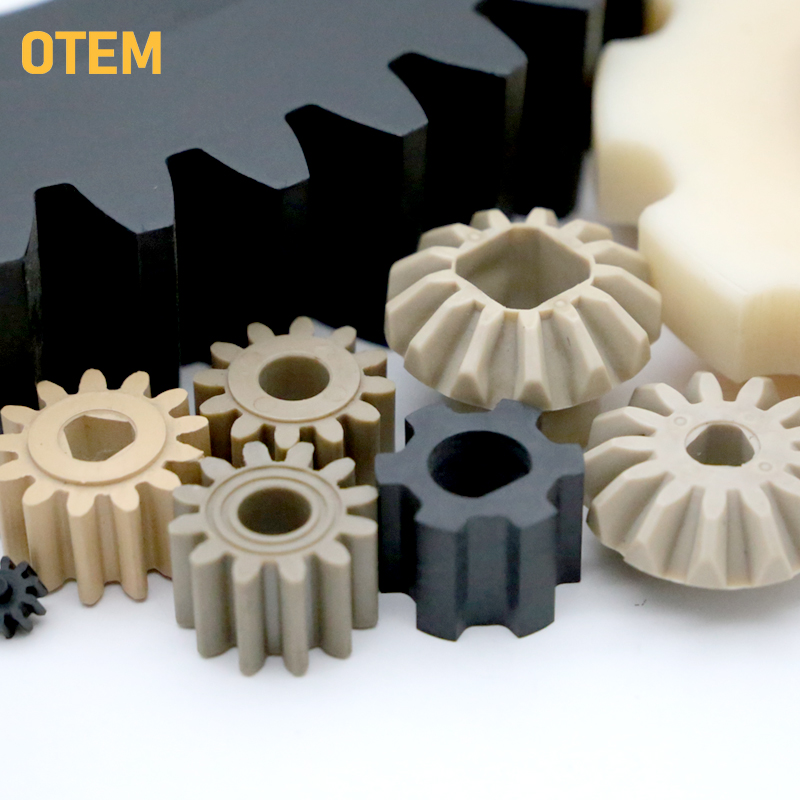
1. Material Gene: Innate Advantages of Plastic Gears
The performance code of plastic gears is hidden in their molecular structure. Unlike metal materials that rely on crystal structure, engineering plastics form unique mechanical properties through the entanglement of long-chain polymers. The regular arrangement of the molecular chains of polyoxymethylene (POM) gives it rigidity comparable to that of metals, the amide groups in the nylon (PA) molecules bring excellent shock absorption performance, and the benzene ring structure of polyphenylene sulfide (PPS) builds stability at high temperatures.
This molecular-level property translates into three major application advantages:Weight RevolutionPlastic gears of the same volume are 70%-80% lighter than steel gears, greatly reducing motion inertia;Self-lubricating propertiesIt is caused by the molecular migration of some plastics. For example, a lubricating film will form on the surface of POM, which can reduce friction loss by more than 30%.Acoustic OptimizationThanks to the damping effect of the polymer, the gear meshing noise can be reduced by 15-25 decibels, which is equivalent to turning the roar of a vacuum cleaner into the sound of turning pages in a library.
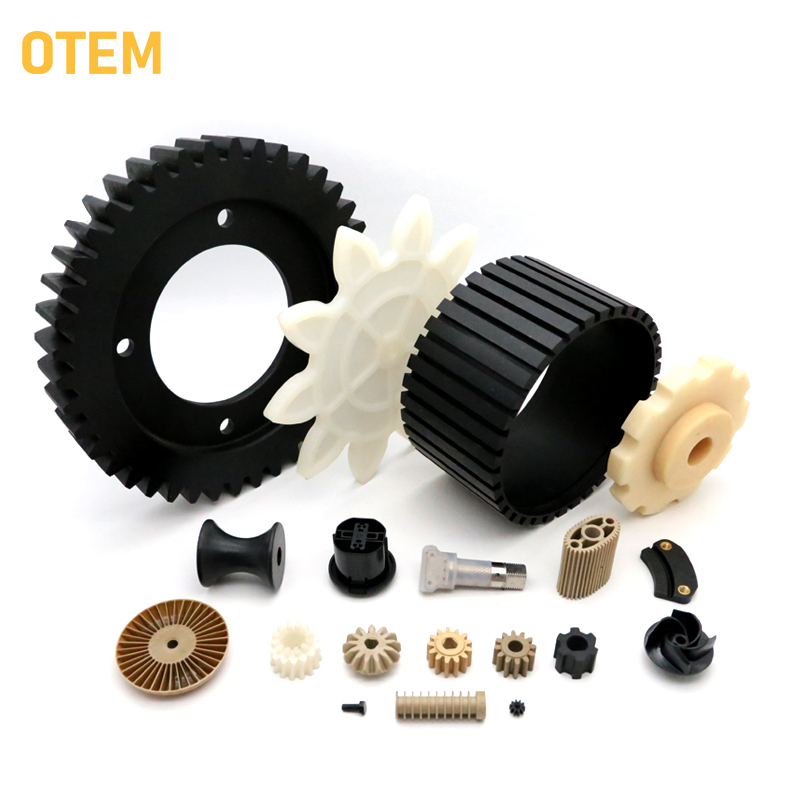
2. Precision molding: a technological breakthrough in injection molding
The precision of modern plastic gears has broken through the traditional cognitive boundaries. Micro injection molding technology can realize the manufacture of micro gears with a modulus of less than 0.2, and the tooth shape error is controlled within 3 microns, which is equivalent to 1/20 of the diameter of a human hair. The progress of mold temperature control technology has reduced the shrinkage fluctuation range of crystalline materials (such as POM) from ±0.8% to ±0.2%, ensuring that the mass-produced gears have a high degree of consistency.
On the production line of a gear manufacturing company in Dongguan, a 128-cavity precision mold continuously produces printer gears at a rhythm of 15 seconds per time. In each cycle, the 280℃ melt accurately fills the 0.12mm tooth gap space under 1000bar pressure, and the mold temperature controller stabilizes the mold temperature at 90±1℃. Such process control enables the daily production capacity to exceed 100,000 pieces while keeping the defect rate below 0.02%.
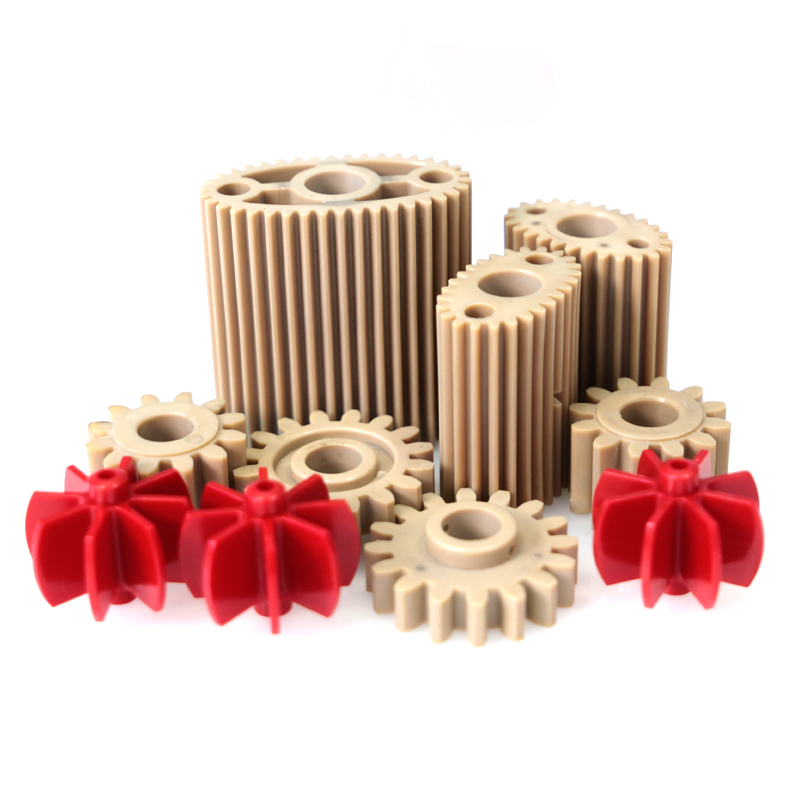
3. Application map: from micron level to industrial level
In the medical field, the insulin pump gear set made of polycarbonate (PC) can achieve precise control of drug dosage with its biocompatibility and 0.01mm-level motion accuracy. The PEEK gears in the electric seat adjustment system of the car can maintain transmission efficiency in an environment of -40℃ to 160℃, and the service life exceeds 100,000 cycles.
The latest breakthrough in the field of industrial robots is eye-catching: the carbon fiber reinforced PPS harmonic reducer gear developed by a Japanese company, while maintaining the lightweight advantage of plastic, has increased the torque capacity to 300Nm and the torsional stiffness to 200Nm/arcmin, fully meeting the precision transmission requirements of collaborative robot joints.
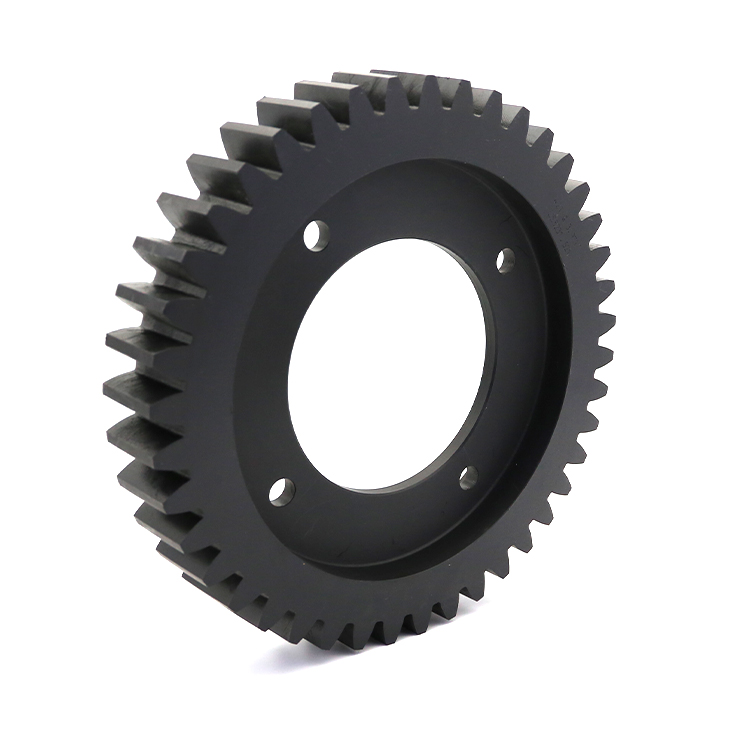
4. Extreme Challenge: Breakthrough in the Performance of Plastic Gears
Faced with the challenges of high-temperature environments, material scientists have developed new materials with continuously improved heat resistance levels through molecular modification. Liquid crystal polymer (LCP) gears can work continuously at 240°C, and their heat deformation temperature is 120°C higher than that of standard nylon. The LCP helical gear set in an electric vehicle air-conditioning compressor successfully passed an 8,000-hour endurance test with a performance degradation rate of less than 2%.
In the heavy-duty field, German engineers developed glass fiber/carbon nanotube synergistically reinforced PA66 gears with a bending strength of 280MPa, four times higher than the base material. This composite gear has been used in the steering mechanism of small engineering machinery and can withstand impact loads of up to 200J without tooth root fracture.
5. Green Smart Manufacturing: A Path to Sustainable Development
Bio-based materials inject environmental protection genes into plastic gears. PA610 gears synthesized from castor oil extracts have a carbon footprint 60% lower than petroleum-based products and are used on a large scale in electric bicycle transmission systems. The more advanced cellulose nanocrystal-reinforced PLA gears can be completely degraded in 6 months under industrial composting conditions after completing their transmission mission.
3D printing technology has opened up a new model of distributed manufacturing. TPU flexible gears formed by selective laser sintering (SLS) have the transmission accuracy of traditional gears and can absorb system impact through elastic deformation, which is particularly suitable for the safety joint design of service robots. A maker space in Beijing has achieved 24-hour rapid response manufacturing of customized gears using desktop 3D printers.
Looking back from the era of intelligent manufacturing, the development trajectory of plastic gears is clearly visible: from the "economic choice" of replacing metals to the "technical carrier" of creating unique value, from structural parts to functional parts, the transmission revolution triggered by the material revolution is continuing to deepen. When nano-enhanced materials meet topological optimization design, when biodegradable technology is integrated with digital manufacturing processes, plastic gears are writing their own transmission legends - this may be the unique charm that material evolution and technological iteration have given to modern industry.
? ? ? ? Guangzhou Aote Engineering Plastics Co., Ltd., your professionPlastic gearconsultant!
About Us Product Infor Application Service Human Resources Contact us
———— ———— ———— ———— ———— ———— ————
Company Profile Hign-Perfomance E?egineering? news Industry Application Technical Q&A Humanistic care Contact information
C?ompany culture E?egineering Plastic Applications Humanities Policy Online message
Enterprise Honor Fluoroplastic Job Recruitment